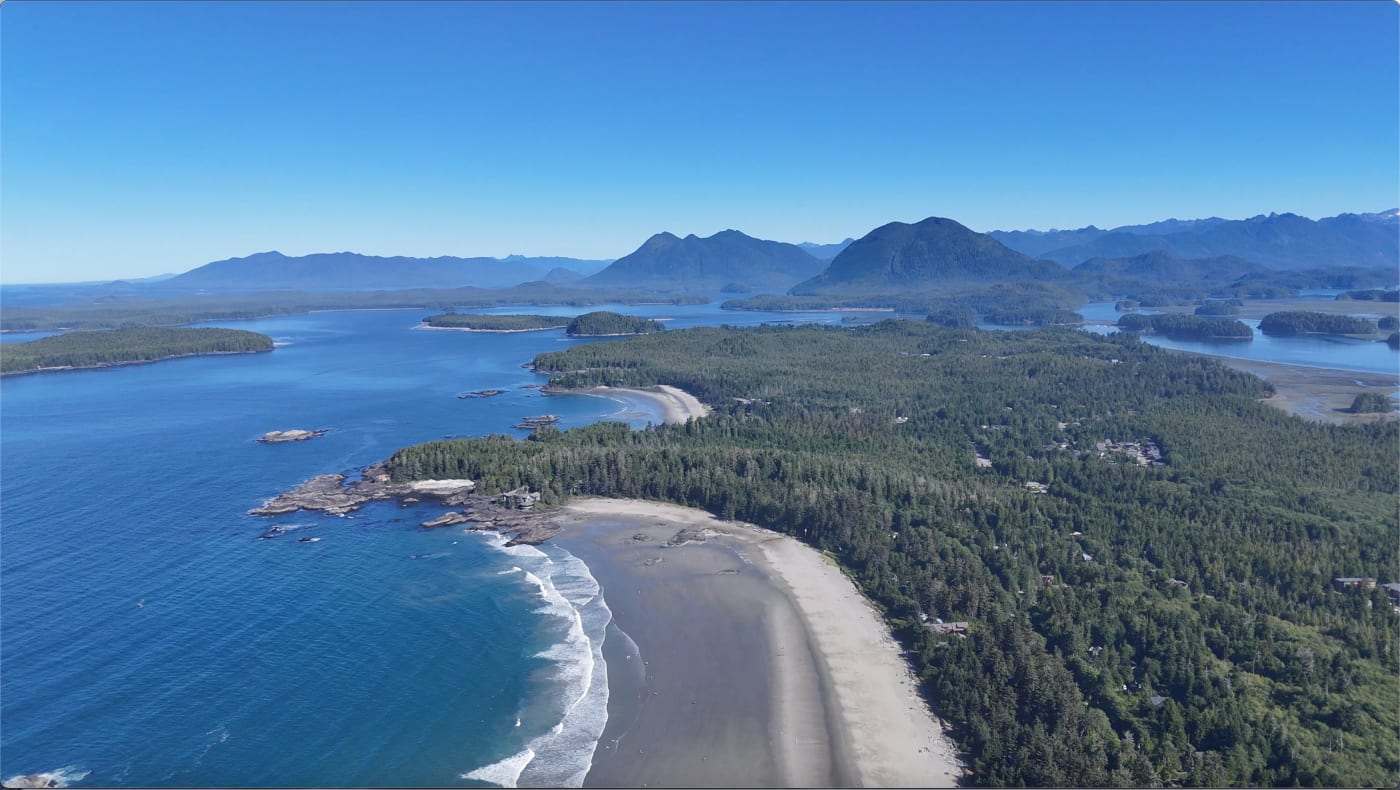
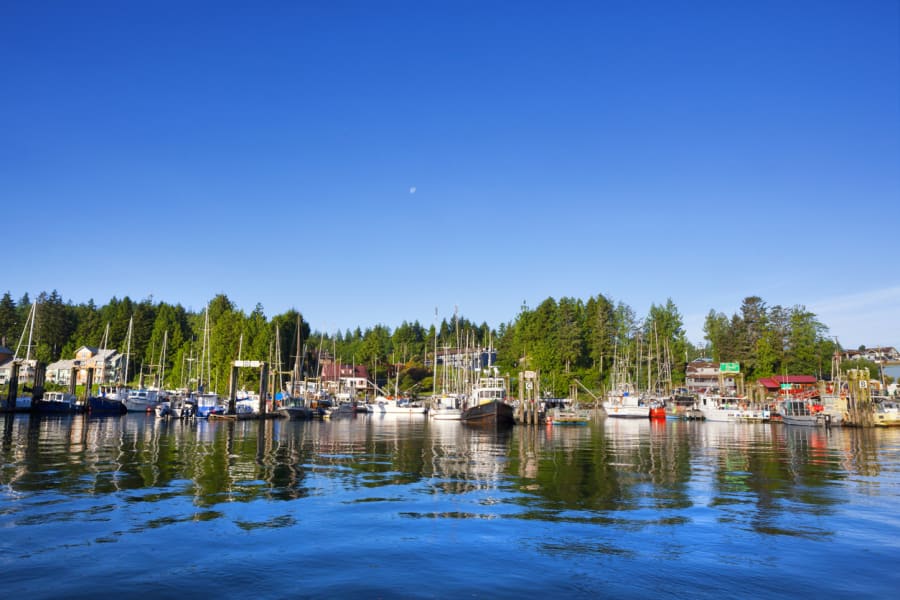
Tofino, a fishing village at the edge of the country



For those who have lived in British Columbia, or have been fortunate enough to visit, it is well known that there seems to be no end to the charms this stunning and diverse part of the world has to offer.
From the rainforest of Vancouver Island to the beautiful coastline to the Rocky Mountain range, just about every outdoor activity is available to adventure-seeking travelers from all over the world.
Within this magnificent region of Canada there are hundreds of gems tucked away, just waiting to be discovered. One such gem lies along the southern coastline of British Columbia. For hundreds of years it remained hidden from the world until the last half of the 20th century, when it finally made its big debut. I am pleased to introduce you to the beautiful district of Tofino.

Tofino is part of the Clayoquot Sound region in the southwest of British Columbia. It was named after the nearby Tofino Inlet and officially established as a town in 1909, though its history dates back much, much further.
For thousands of years, Vancouver Island was inhabited by the Nuu-chah-nulth people, an Indigenous nation also known as one of Canada's First Nations, who have made the island their home for over 10,000 years. Historically they found most of their provision in the sea, fishing and hunting along the coastline. The teeming waters offered salmon, cod, halibut and various shellfish, which in turn attracted sea lions, seals and even whales.
The Nuu-chah-nulth population was said to have reached almost 100,000 people by the 18th century, and there seemed to be nothing to stop it from reaching 200,000 in years to come, until the arrival of strange, pale-faced visitors.

Europeans and Americans had already settled the East Coast of North America and were now setting their eyes on the West Coast, which led them to Vancouver Island. The region had plenty to offer as far as trade was concerned: sea otter pelts were of high value in Europe and America, and this coastline happened to be full of them. A short time after their arrival, the Nuu-chah-nulth population began to decline drastically, through violent encounters with the Europeans and the diseases they brought. As the First Nations' numbers fell, the population of foreigners rose.
The name Tofino was first given to a large southern inlet discovered by two Spanish naval captains, Dionisio Alcalá Galiano and Cayetano Valdés, in 1792. Galiano had been a student of an admiral named Vincente Tofiño de San Miguel, a famous connoisseur of mathematics, hydrography and cartography. In honour of his teacher, Galiano christened the inlet Tofino Inlet, and that inlet would, one hundred and eighteen years later, inspire the small settlement we now know as Tofino.

For the first half of the 20th century, however, no one really knew much about Tofino, except for other towns on Vancouver Island, which had dubbed it "Tough City." The rough winter seasons made this trading town an undesirable destination except for a small population of loggers, fishermen and hippies.
In 1959, things began to change for this sleepy little town.
There had been very few ways in and out of Tofino, making it next to impossible to reach for the average traveler. In 1959 a logging road was put through the mountains between Port Alberni and the coastline near Tofino. It made transportation much easier for loggers during the week, and on weekends the road was left wide open for travelers. For the first time there was a way to reach this isolated area, bringing Tofino into the business of tourism.
At first the visitors were mostly young adults looking for good surfing and camping in the glorious Long Beach region. This raised awareness of all that Tofino had to offer, but the number of visitors didn't seriously begin to rise until two significant events in the 1970s. The first was the establishment of the Pacific Rim National Park in 1970, which extends to Long Beach and brought park visitors directly into Tofino's path. The second was the paving of the gravel road between the coast and Port Alberni in 1972, at the time the only paved road on the island leading directly to the Pacific Ocean. Between these two events, Tofino was officially put on the map.

Tofino's popularity has only grown over the years. Annually, about 750,000 visitors come to see the many attractions Tofino offers throughout the year, especially the outdoor excursions and natural phenomena. One such phenomenon is the migration of the grey whales: every year they travel from Baja to Alaska, passing the Vancouver Island coastline in March. Thousands of people gather to catch a glimpse of the enormous animals and to attend the Pacific Rim Whale Festival.
The Pacific Ocean offers not only the chance to glimpse sea life but some singular fishing opportunities. Like the Nuu-chah-nulth who took advantage of the many species indigenous to the coastline, thousands of anglers are drawn to Tofino's shores every year. Salmon and halibut are a constant enticement for those looking for a good-sized haul.
The pull of all these attractions is just scratching the surface of what this little town has to offer. It has come a long way from its humble beginnings as "Tough City," virtually invisible to the rest of the world. Now it is a highly sought-after vacation spot for thousands across North America. Whether your niche is fishing, hiking, surfing, boating or simply sightseeing, Tofino is a destination worth experiencing.